Trust, reputation and moderation
Expressive reactions, specific endorsements and structured tools for community care.
A binary like cannot distinguish “I agree” from “this matters”, and neither is the same as trusting its author. Tremr kept those signals separate so they could remain useful to readers, writers and moderators.
Reactions with meaning
Graduated voting captured strengths of recommendation and disagreement. Semantic reactions added a vocabulary that included Agree, Disagree, Awesome, Interesting, Important, Smart, Funny, Sad, Worrying, Misleading and Easy, tiger! Authors got more informative feedback, and ranking systems did not have to pretend that every tap meant the same thing.
Reputation with dimensions
Members endorsed specific qualities in another person’s contribution: writing, images, video, insight, information, balance, respect, trustworthiness and conversation. Reputation then separated broad trust and respect from standing in subjects such as politics, technology, education, culture and science.
A separate Rails application handled community operations and calculated those scores. That kept moderation and reputation work independent of the main publishing request path while allowing it to consume the same events.
Moderation as product infrastructure
Every post had a structured reporting workflow covering abuse, spam, hate speech, false information, trolling and other concerns, with confidential notes for moderators. Administrative fact checks could be represented on the post itself. The aim was not to replace judgement with an opaque score, but to give members expressive tools and moderators structured evidence.
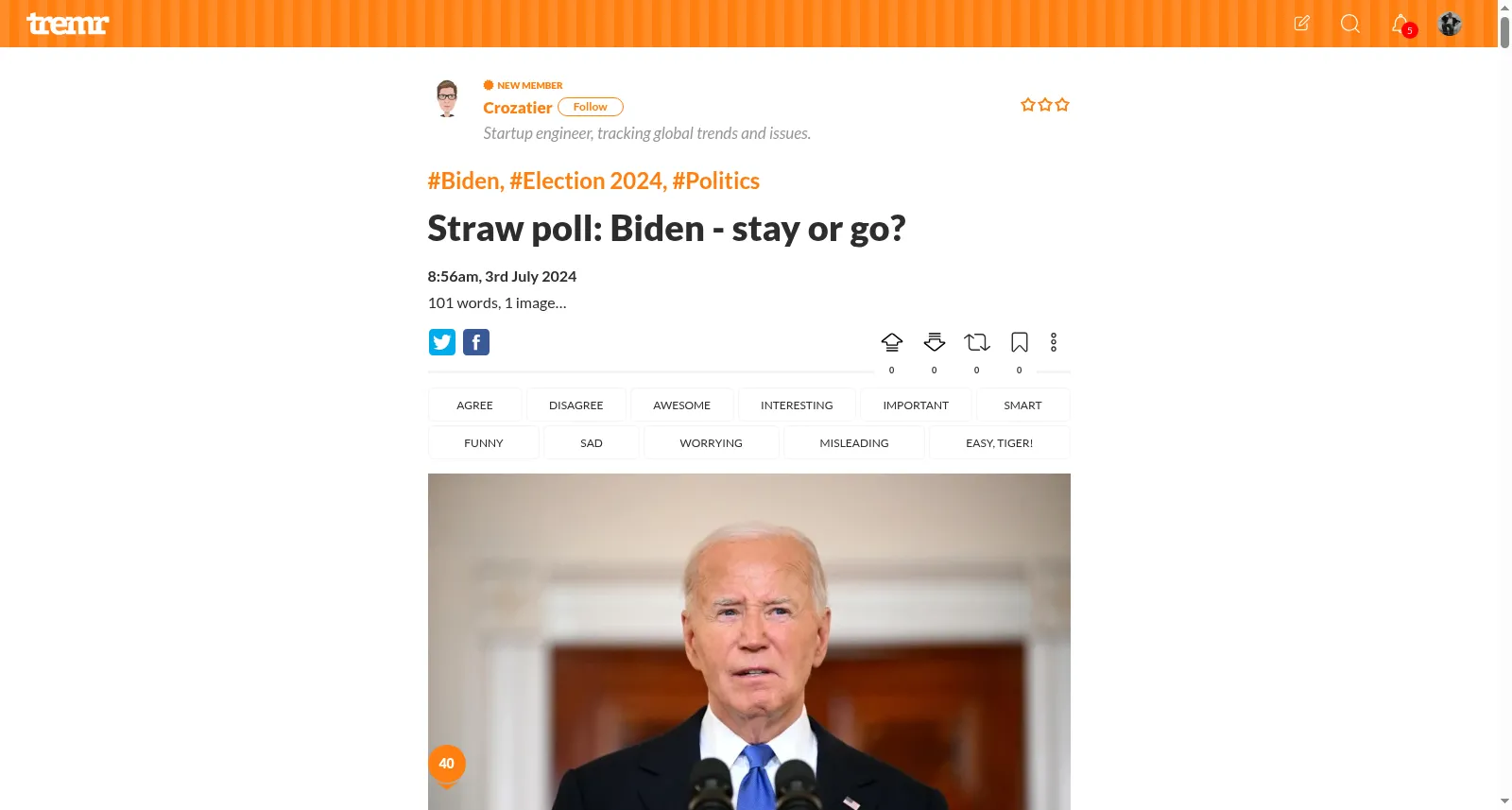
Reactions distinguished agreement, importance, humour and concern instead of flattening them into a like. 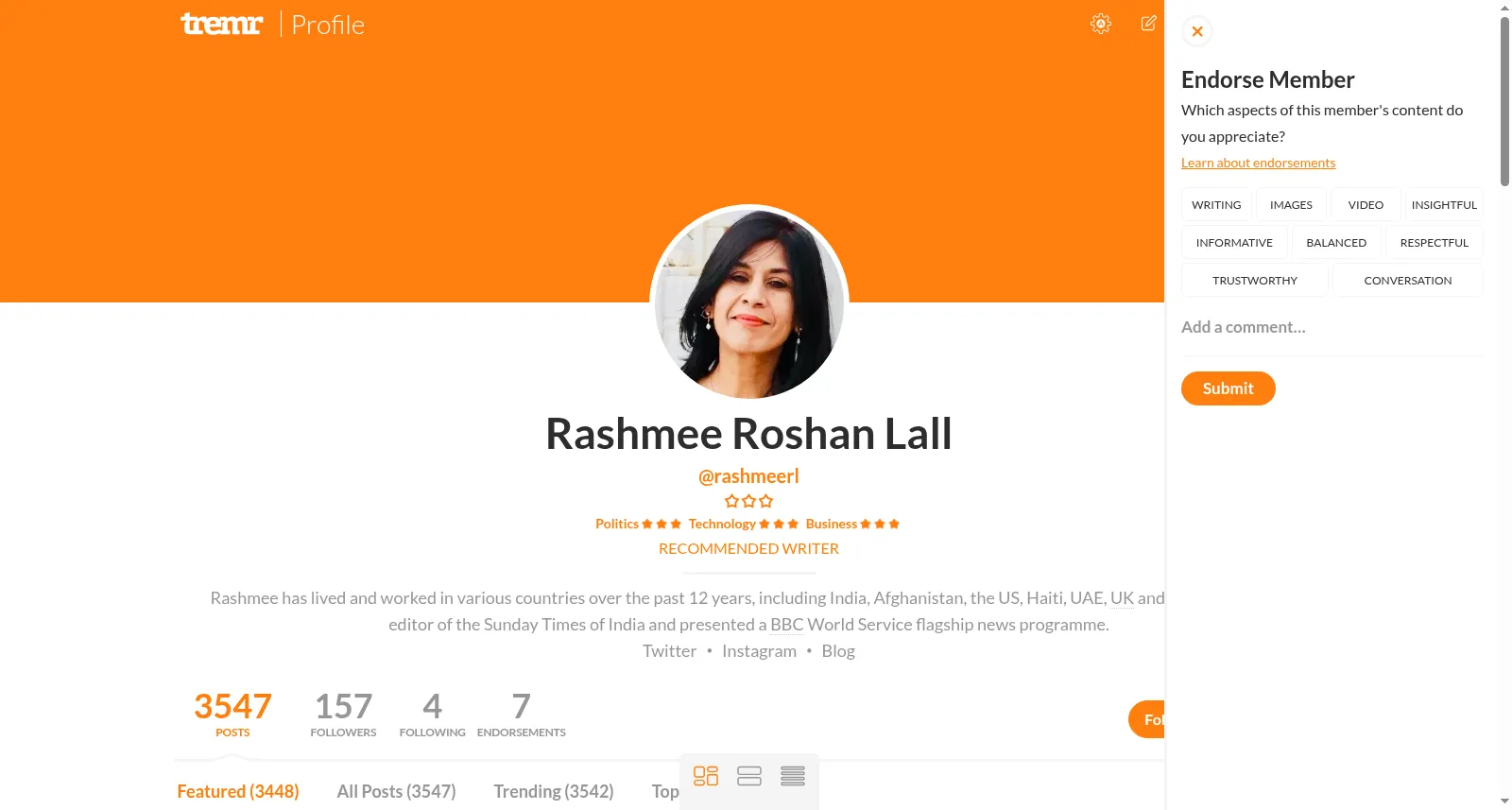
Endorsements named the quality being recognised and could include an explanation. 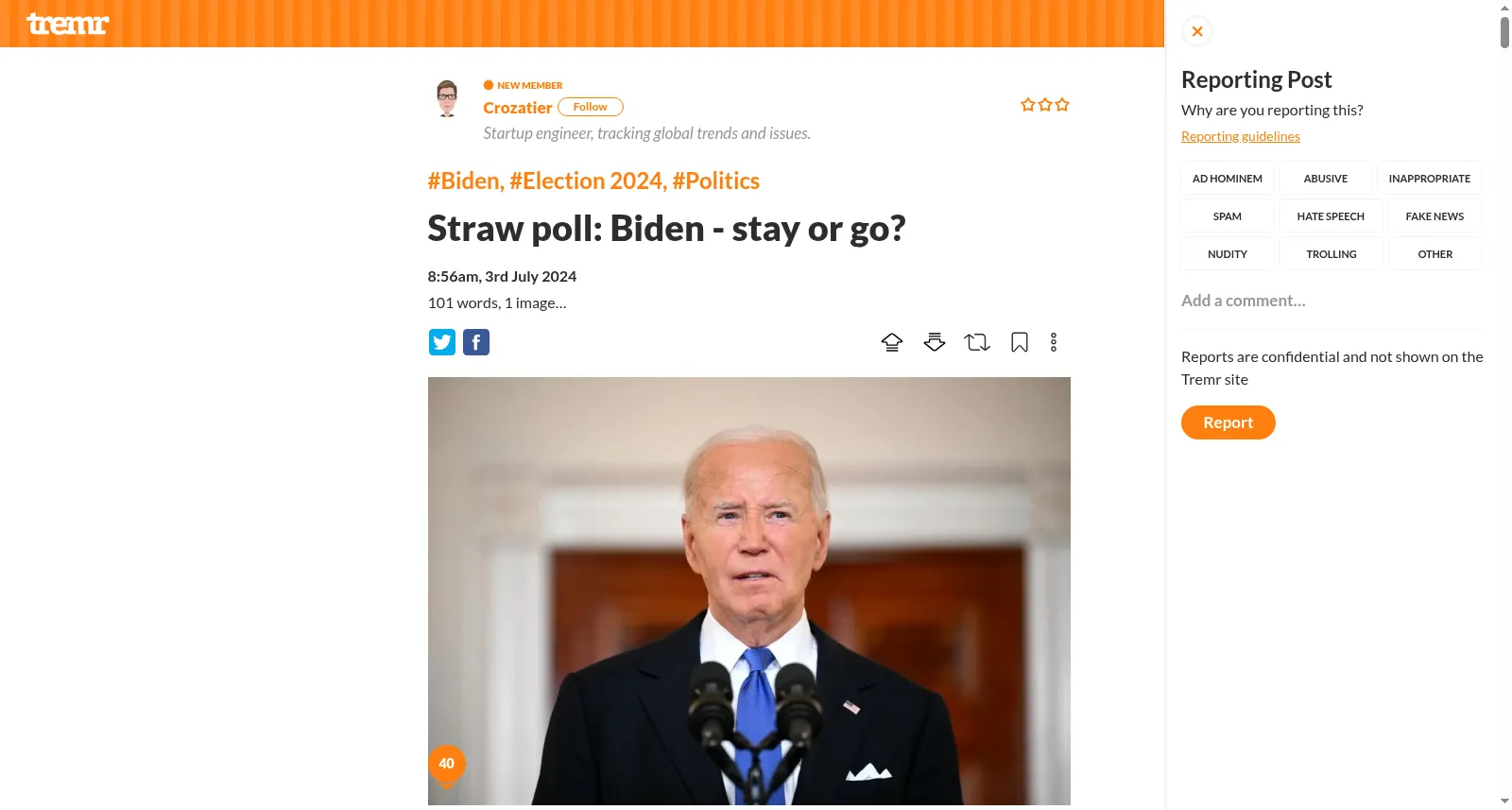
Structured reports gave moderators a reason and optional confidential context.