Rum and Gold
Eighteen identical cards, and the game is where they land
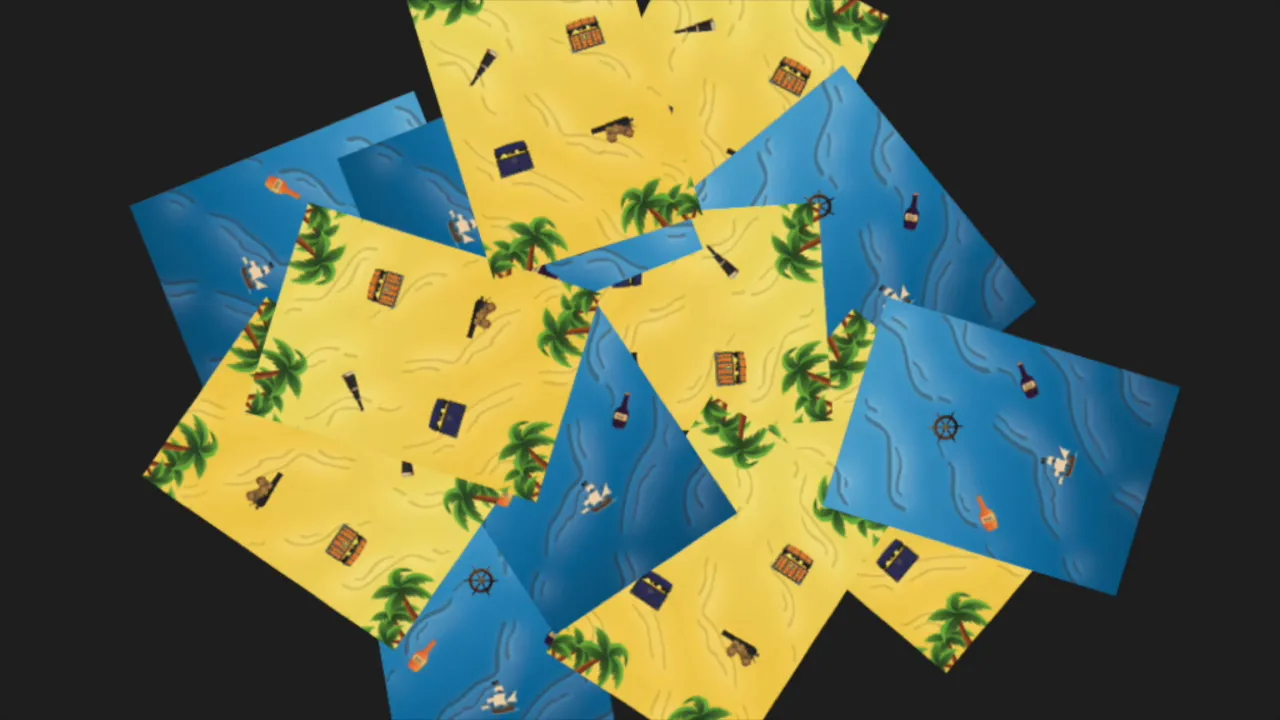
Button Shy ran a design challenge in September 2019 with one rule that made it interesting: eighteen cards, and every card had to be identical. Not eighteen cards from a shared template — eighteen copies of the same card.
The obvious way to read that is as a cramming problem. You get one card face to carry the entire game, so you fill it: numbers in the corners for one use, a track down the side for another, symbols that mean something different depending on which way the card is turned. The card becomes a Swiss Army knife and the rulebook explains it.
I went the other way. If every card is the same, then the only thing that can possibly differ between two cards on the table is where it is, which way up, and what is on top of it. So make that the game, and put almost nothing on the card.
The card
One face is sand, the other is ocean. Each face carries four icons with a lot of space between them: two treasures and two actions.
On land, an orange chest and a purple chest, plus a spyglass and a cannon. At sea, an orange rum and a purple rum, plus a helm and a galleon. Whichever way a card lands, it is offering you two things to score and two things to do.
That’s the whole card. No numbers, no text, no corner values.
Dropping the island
You deal everyone a hand, shuffle the rest so that faces and orientations are mixed, and then drop the remaining cards one at a time from about eight inches above the table. Not place. Drop.
Whatever heap that makes is the Island, and it is the board. Cards that miss get collected up and dropped again until they land somewhere overlapping, so the board finishes as one connected mess that nobody designed. The overlaps decide what is visible, and what is visible is what exists.
Playing on it
On your turn you activate one icon and then drop one more card from your hand.
An action icon only works if it is fully visible — unobscured by any other card — so half the game is that dropping a card doesn’t just add treasure, it switches other people’s options off. Each action is a physical thing done with one hand:
- Cannon — pin the cannon with one finger, put a second finger on the same card, and flick. Anything knocked clear of the Island is out of the game.
- Spyglass — a finger on the spyglass, a finger on any treasure, and pinch them together. The spyglass mustn’t move, so you are dragging the treasure towards you rather than moving the world.
- Helm — a finger on the helm, an adjacent finger rotates that card.
- Galleon — blow on it, once. Cards that leave the Island are deserters, and they get dealt out to the other players, which hands them ammunition.
Then you drop your card, and the board is different for whoever is next.
The game ends when the last card in the last hand is about to be dropped. That card isn’t added — it’s the galleon you escape on, and it leaves with you.
Two ways to be seen
The rule I like most is the one that treats the two kinds of icon differently.
An action icon has to be perfectly clear to be used. A treasure icon only has to be identifiable to be counted — a chest poking out from under a card, a bottle of rum half-buried in sand. So the same overlap that kills an action might leave a treasure perfectly countable, and the two things you want from a card are fighting each other for the same square inch of table.
Ties go to sudden death: everyone still level keeps taking actions, one at a time, nothing new added, with the extra rule that you can’t act on the card the last player acted on. It gets vicious quickly, because by then the only way to gain a point is to take one off somebody else.
How it did
228 people entered. The top twenty were announced, and Rum and Gold wasn’t in it.
I still think the read on the brief was the right one. Eighteen identical cards is a constraint that punishes density, and what it wants is for the cards to stop being cards and start being terrain — the same instinct that makes a jigsaw or a game of pick-up sticks work without a single symbol printed on anything. The version that lost is one weekend old and plays fine, which is about as much as that is worth.
Look at it
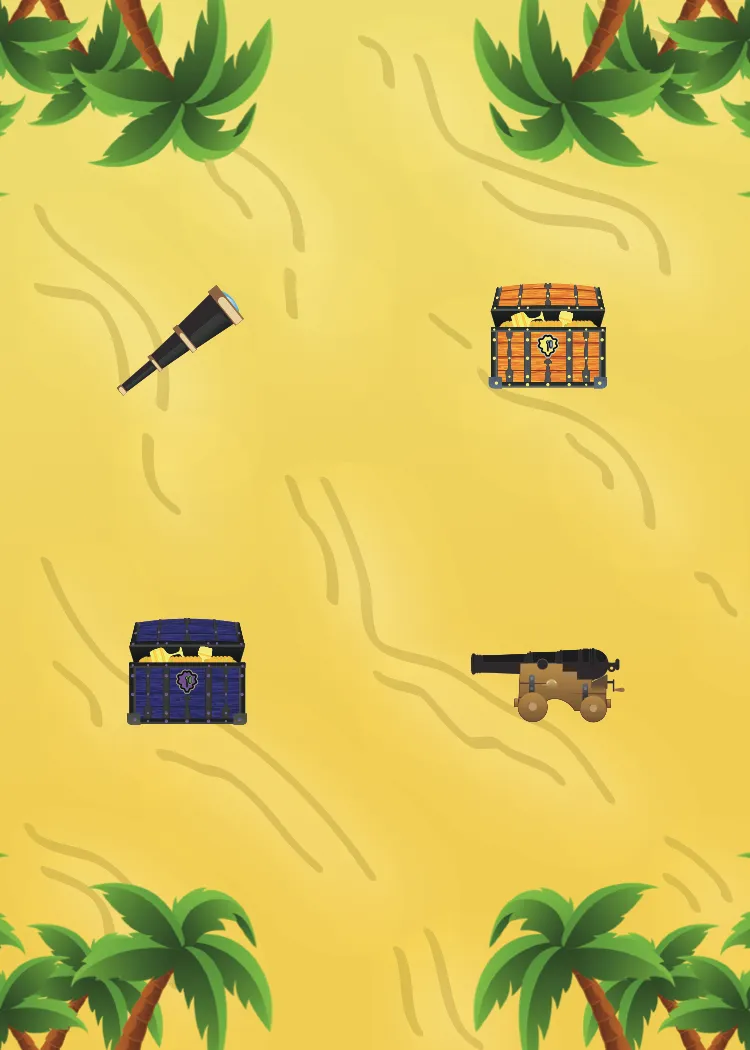
The land face. Two treasures, two actions, and a lot of empty sand between them — the empty space is what a covering card is aiming for. 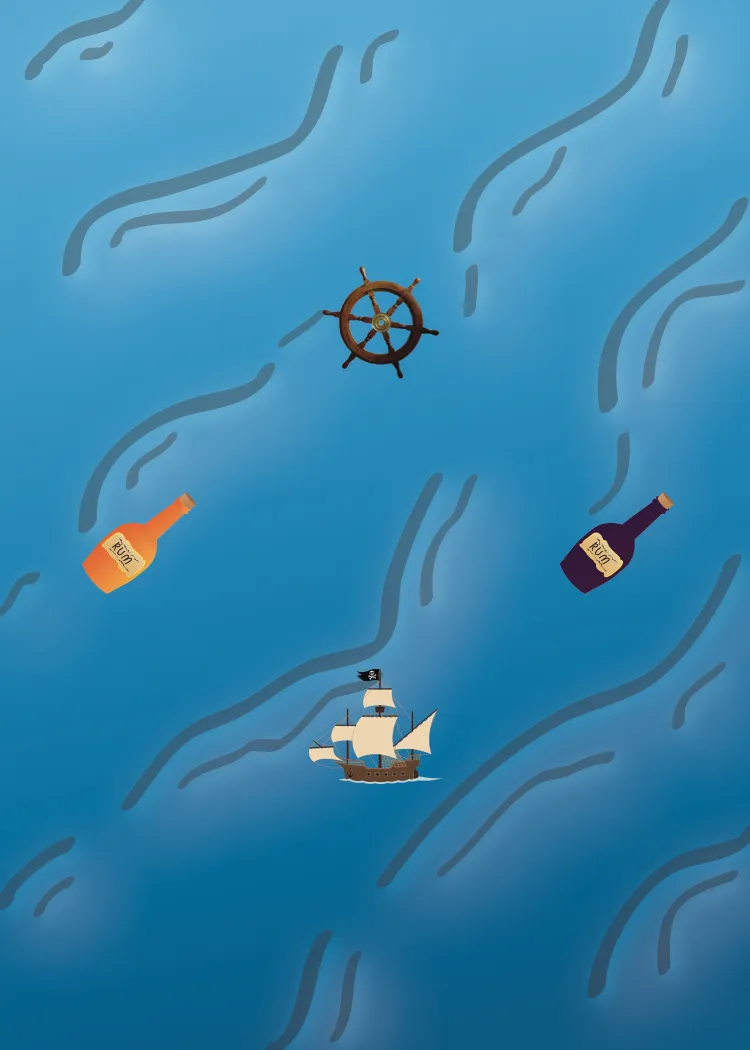
The ocean face. The same four jobs, so a card is useful whichever way up it falls. 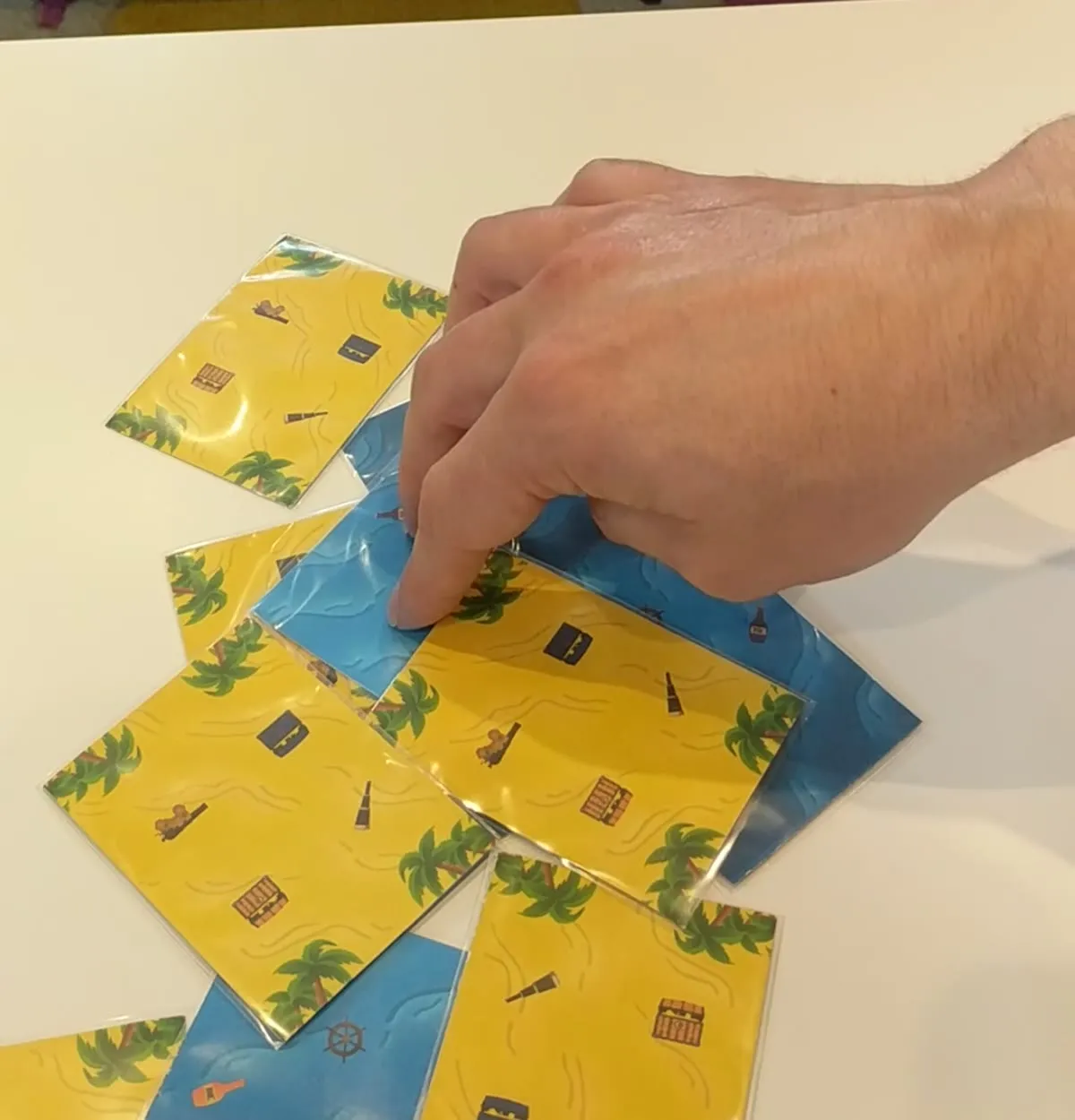
Every action is a thing you do with one hand. This is the helm: a finger on the icon, and an adjacent finger turns the card. 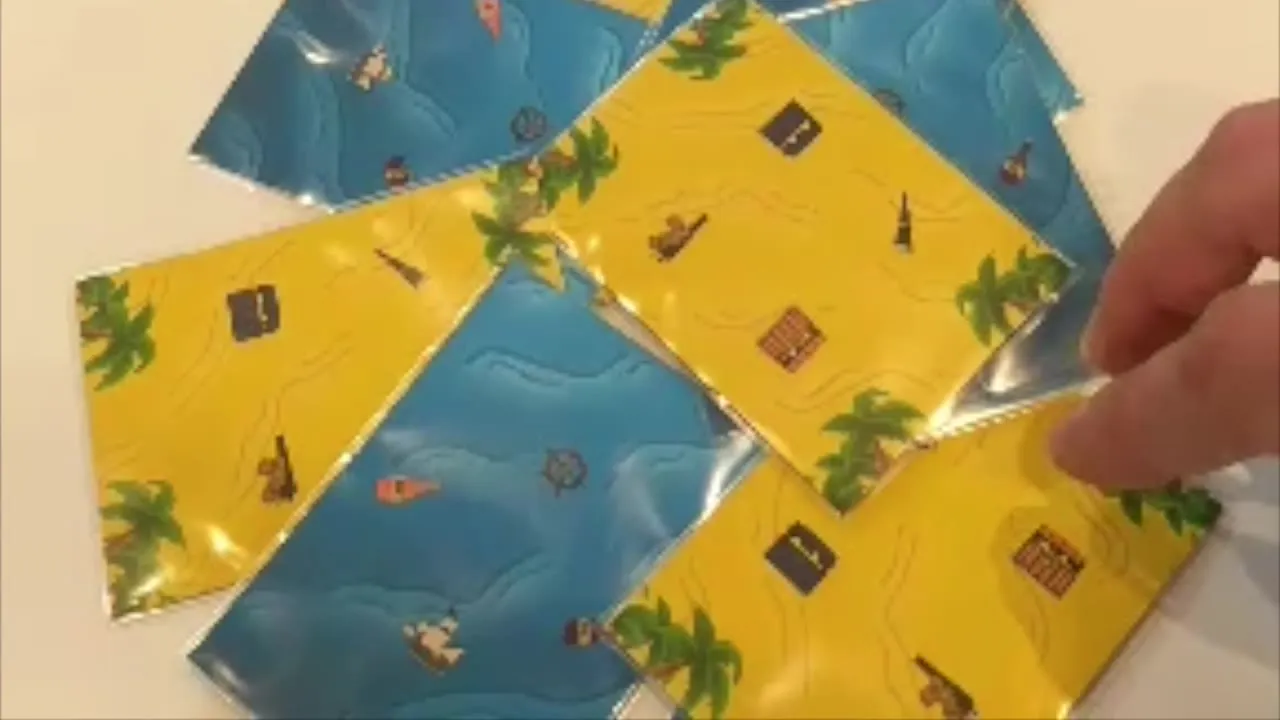
Sleeved and played on a hard table. The shine is the point — cards had to slide. 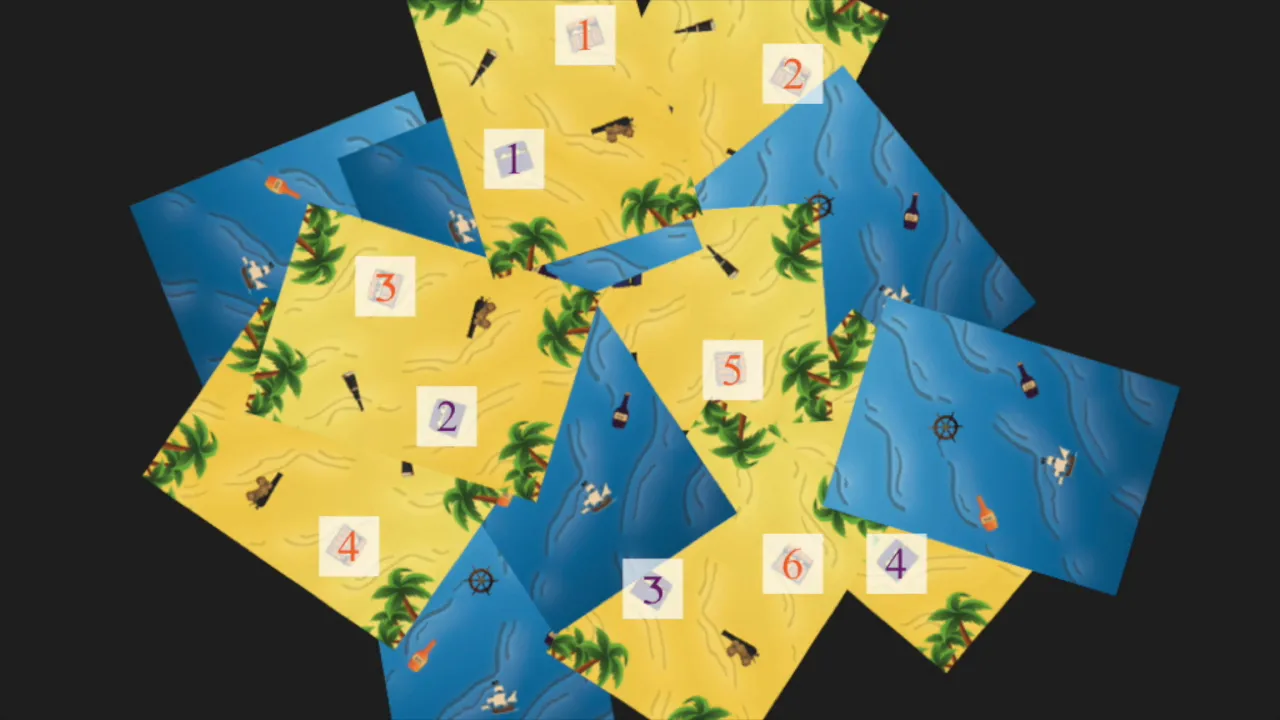
Scoring. A treasure counts if you can tell what it is — including a chest half-buried under another card.
Links
YouTube · Button Shy
The 18 Card Challenge 1-1: Design A Game With 18 Identical Cards
The brief. Eighteen cards, all of them the same, one month.
YouTube · Button Shy
The 18 Card Challenge 1-2: We Received 228 Submissions!
How many people had the same month.
YouTube · Button Shy
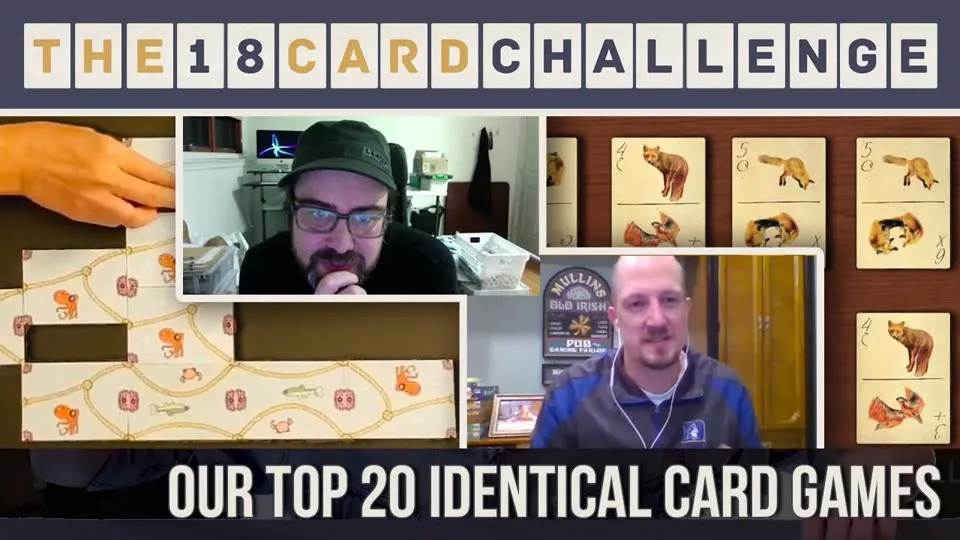
The 18 Card Challenge 1-3: Our Top 20 Identical Card Games
The twenty that got through. Rum and Gold is not among them.